The Opportunity Gap
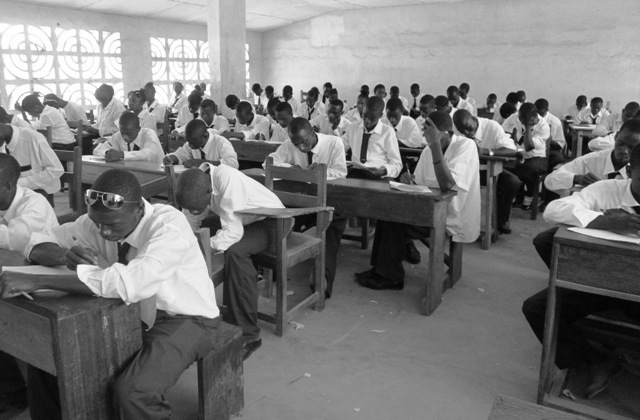
All the big news agencies are picking it up so I’m sure you’ve heard. Of the estimated 25,000 students who wrote the entrance exam for the University of Liberia this year, none of them passed. I heard the news first when I was watching Al Jazeera over the weekend (one of the many luxuries of life at Cuttington) and, honestly, I didn’t think much of it. I’ve gotten so used to life being unfair here that it hardly seemed like news.
As someone who has taught high school for the past two years and who will soon start teaching at Liberia’s second largest university, I am very disappointed. But not in the students. Never in the students. I’m disappointed in the reporters for failing to dig in to the issue. Many stories pick up a quote where Ma Ellen calls on students to be more serious. You could say that to students anywhere! The take home message from this tragedy should not be that Liberian students are lazy or stupid or unmotivated. I taught almost 500 students while I was in Sanniquellie and I wouldn’t say that a single one of them was lazy, stupid, or unmotivated.
The students are not broken—the system is broken. Fixing it should be the story.
A few days ago I was listening to a podcast from the Harvard Graduate School of Education and the guest, John Jackson, president and CEO of The Schott Foundation, talked about the interplay between the achievement gap and the opportunity gap. Before we say kids are under performing, weak, and behind we need to look at where they are coming from and whether they even have the opportunities necessary to achieve at the level we expect. Jackson likens achievement tests to “measuring whether some kids can swim in pools with no water.”
The honest truth is Liberian students don’t have any ‘water.’ They lack basic things like teachers and books and even those who are motivated to learn hardly have the resources they need to teach themselves. Many have uneducated parents who don’t speak English. There are few, if any, books in their home and there probably isn’t a community or school library. If the student is from a rural area they might travel to a provincial capital to attend high school. Their family will spend the entire year saving the $20USD they need for school fees and setting aside a small bag of rice that is supposed to last the entire semester.
Now let me ask you, are those students lazy or is something else going on?
You are not judged by the height you have risen but from the depth you have climbed.
~Fredrick Douglass
“You are not judged by the height you have risen,” Fredrick Douglass said, “but from the depth you have climbed.” Liberia’s education system is in a hole. Students are so far behind that they show up at every institution of higher learning under prepared. But what can universities do? The applicants have a WAEC certificate and a high school diploma. They can’t just say, “Go back!” They need to look into the hole where those students are coming from and give them opportunities to reach the necessary height.
Students graduating high school now were born around the time the war broke out. They spent their lives running from one safe place to another and sitting down from school, often for years. Even those who managed to stay in school suffered. Last year one of my senior students told me he understood math for the first time ever. “Because of the war there was no math teacher at my school from 7th to 9th grade. They just keep promoting us anyway. What else could they do?” Other students bounced between French schools at refugee camps in Guinea and Ivory Coast and English schools in Liberia.
For twelve years teachers have been passing these students and schools have been promoting them under unacceptable conditions and in dubious situations. Liberia is one of the most corrupt countries in the world and, unfortunately, that spills over into the schools. In acknowledgement of that fact most colleges and universities have remedial programs. People don’t actually ‘fail’ the entrance. They just test into either the regular or the remedial program. This is a move I applaud and one I am shocked the University of Liberia is not implementing (or rather are only implementing after this embarrassment). Meet the students where they are and help them move forward. Don’t throw them away like everyone else and everything else has.
That said, I’m grateful to the University of Liberia for making a move toward a more transparent, merit-based system. The corruption there is so notorious and the overcrowding so extreme that I actively discourage my students from seeking admission there. I’ve often heard that even if you pass the entrance you have to bribe someone to actually gain admission and then bribe professors to pass in their classes. They are taking steps in the right direction, but their hard-handed approach has accomplished nothing positive, except perhaps to draw international attention to the desperate conditions in Liberia’s secondary schools.
What I would like to see come out of this tragedy is some serious pressure on and investigation into WAEC. The WAEC is an extremely difficult weeklong high school exit exam. Students write nine subjects and are forced to pass in seven of them. Passing grades in English and Mathematics are mandatory and, traditionally, about 70% of students pass the WAEC each year. So the question is, how did 25,000 of these same students fail a less intense entrance exam, struggling in English, which is at the core of WAEC? I would love for WAEC to answer that question, but the truth is they can’t.
Examination malpractices are widespread and widely known with exam papers and answer keys routinely leaking during the exam week. Clever students often fail in WAEC and irregular, dull students often pass. Last year my school sent 86 students for the WAEC and about 67 of them passed (only one failing in my subject). This year we all expected a similar, or better, result. We sent 81 and—wait for it—only 7 passed, many failing math even though they’d been my students for two years.
Do I have to say it? This smells fishy, especially given the UL news.
WAEC is a true test of neither a student’s academic preparedness nor potential and it is time the Ministry of Education started demanding more from them. If our universities are going to start admitting students based on merit then our high schools have to start graduating them based on merit.
None of my seven students who passed in WAEC wrote the UL entrance exam. This leads me to believe the 25,000 failures reflect on the caliber of students UL attracts more than it reflects on Liberian students as a whole. My students are intelligent, hard working, and highly motivated people who dream about lifting their families and their country. One of them leaves for EARTH University in Costa Rica in less than two weeks on a full scholarship and one of them made a solid pass on the Cuttington entrance (no remedial classes). I don’t know what the others are doing, but I know many of my students sat the entrance at Nimba County Community College in Sanniquellie, what I recommended instead of UL, and made successful passes. “It was so easy!” they reported with big smiles, “Your math was all there!”
There is so much hope for Liberia and my students remind me of that everyday. They want change. They want the opportunity to actually achieve. They don’t want to pay for admissions letters and grades. I dare to speak for them and say that they want a merit-based system. But the system must bear the responsibility for providing that opportunity and bridging the gap. The hole may be deep, but we can’t lose sight of the light.
Visit my WAEC & Math page to download previous exams—and an old UL entrance exam.
The Next Chapter

It has been an extremely busy few months (as you will guess from my lack of posts.) I have officially moved out of Sanniquellie and I have officially closed my Peace Corps service.
But I’m still here.
When I joined Peace Corps everyone asked what I was going to do when I finished, which always struck me as a ridiculous question to ask on the threshold of a two-year life changing experience. I usually smiled, however, and said simply, “My plan is not to have a plan. When the time comes an opportunity will present itself and I’ll know what to do.”
Well the right opportunity has presented itself and I’m staying in Liberia. (That part has never really been a question. I think most of you can tell I’ve found my life’s work here.) I’ve signed a one-year contract to teach at Cuttington University in Gbarnga under the Excellence in Higher Education for Liberian Development (EHELD) project, a joint venture between RTI and US AID. This is all a really complicated way of saying that I’ll be teaching agriculture and computer classes as well as running a resource room and career center. It’s a big change… but not really. My mission has always been to give people the preparation they need for the opportunities they deserve. That remains the same.
My heart will always be at Central High in Sanniquellie, but there is a lot of good I can continue doing here. And what I keep telling myself is that just because one chapter closes doesn’t mean the narrative loses all its characters. The salary boost I experienced will allow me to bring my best math student to study at Cuttington. We’ve been chasing scholarships all year and the stars refuse to align so I’m making my own. Congratulations, you’re the inaugural winner of the “Ms. RB Scholarship for Excellence and Perseverance”! He’ll be my third son. I desperately want some daughters, but none of them passed in the WAEC (more on that heart breaking tragedy later).
Sorry, I never announced my second son here because I was so busy… My student Newton is going to EARTH University in Costa Rica! He’ll join Festus who went last year. The same as Festus, Newton was the only student admitted from Liberia this year. The only word I have for it is unbelievable. He was the one I wanted and the one I had been praying about for months. We sat on my porch one evening last fall and I started grilling him with personal questions (like I do with all my scholarship students). He shrank away when I asked his age, “It’s shameful. I should be at college by now. My sister is there.” I pressed on and got it out of him. “You know,” I said, “everything happens for a reason. If you were at university you wouldn’t know me and we wouldn’t be sitting here right now. Something good is going to happen for you. Just wait. We’re going to fight for it.”
I don’t know if he believed it, but I did. So much so that I sent him to Monrovia to apply for a passport before we’d finished a single application. He leaves at the end of the month.
The past two years have often been frustrating and uncomfortable. What has kept me going, however, is all the hope, hope that hard work can turn life’s pain, suffering, and bitterness into opportunity. I am humbled to have been a witness to the remarkable young people of Sanniquellie Central High. I am equally humbled to find myself on the receiving end of opportunity.
It rarely looks like it at the beginning (and even less so in the middle), but in the end it does, in fact, all work out. Just keep moving forward, friends.
What Not to Wear
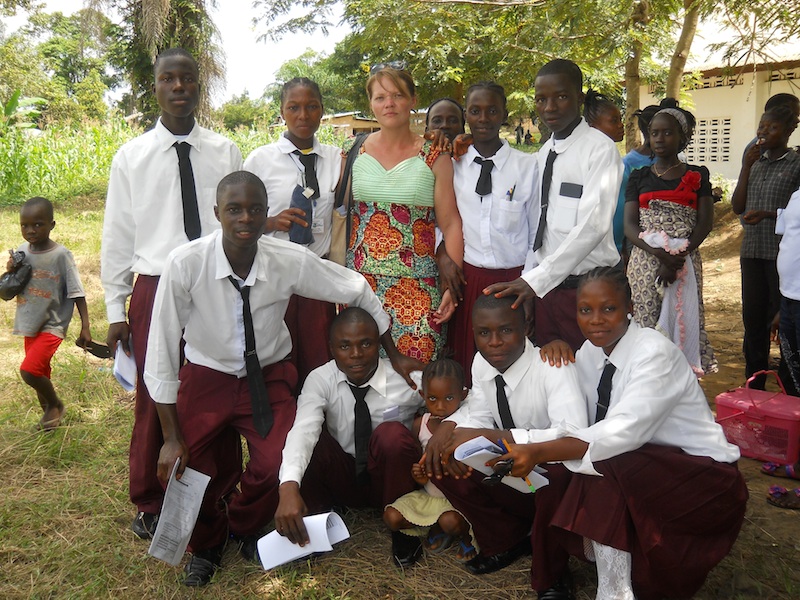
Bluffing with some of my senior students right after they finished their math WAEC.
My mother raised me not to judge a book by its cover. When you are a Peace Corps Volunteer, however, you are forced to be conscious of your ‘cover.’ Liberia is a culture that values neat, clean, and modest appearances and too many volunteers fall into the romantic trap that for two years they can let it all hang out. In America we see dress and appearance as a form of personal expression so we feel embarrassed to critique other people’s dress code.
The truth is, no one will say anything to you but your community will talk about how you dress. It’s up to you if that gossip is positive or negative. How you dress will determine how your students behave in class, which community leaders choose to work with you, and how much you get heckled on the street. But if those things don’t matter, sure, go ahead and let it all hang out.
For those of you who want to maximize the impact of your two years in Liberia here are eight dos and don’ts.
- DO model the dress of people you respect and the community respects. You will see people dressed all kinds of crazy ways but to be effective you have to operate on a higher level. Look to the leaders and the people above you like the principal, the CEO, the County Superintendent, etc. Or at the minimum look at your students. They are required to come in a clean pressed uniform everyday with neatly shined shoes. If you don’t look at least as good as them you can’t expect them to respect you and behave in your class.
- DON’T wear shower slippers (otherwise known as rubber flip-flops) anywhere but your house and your yard. Flip-flop-style sandals are fine as long as they are made of leather or something quality. You will see a lot of Liberians walking around in shower slippers so you will be tempted, but again look to the leaders. You will never see them do that. Quality sandals cost money and people can’t afford to spoil them walking around all day selling or working. Whether you want to accept it or not, your community knows you can afford to do better and they expect you to.
- DO wear African clothes to teach and attend meetings. This sends the powerful message “I am here with you and I respect your culture.” You might feel silly initially, but it will actually be less distracting to your students and your community. It also shows people without a word that you live here, you know your way around, and you are the kind of person they want to work with. There is one administrator at my school who never says anything at meetings, but always stands up at the end to commend me on my dress code (a lapa suit everyday) and say that I am an excellent example to the young women.
- DON’T wear anything short. This applies to men and women. Yes, it is hot in Liberia, but you will sweat no matter what you wear so start accepting it. Men should wear long trousers, especially to school. Primary school children wear shorts and junior high and high school students wear long trousers. This should say it all. Women, you need to keep those knees covered. A mid-length skirt is all right, but if you look to women in the community you will see all of them wearing long skirts. If you are sewing clothes just ask your tailor for advice. “Make it so it can go to school.”
- DO keep your hair (and beard if applicable) under control. Again, your students are expected to neatly braid or closely shave their hair. Facial hair on men is rare and the few times I have seen it the people with me have accused the person of looking like “a damn bushman.” Are you getting me?
- DON’T wear things that are skintight or show your shape too much. Really. I beg you. There is a trend lately that female volunteers wear running tights or leggings like trousers. No one wants to tell you, but this is not ok. I repeat: this is not ok! You will see young Liberian women doing this but some of them are ‘working’ and at the minimum they are not respected. If you want to be effective at your job (and I hope you do) you are above this.
- (Women) DO wear skirts to teach. Many schools require female teachers to wear skirts. Just accept it. Your students will be distracted if you wear trousers. Remember, your classroom isn’t about you. It’s about creating a place free from distractions where students can be successful. You will encounter plenty of roadblocks here. Don’t set up extra ones over something you have as much control over as your dress code.
- (Men) DON’T wear jeans to teach. You might see other teachers doing it, but again you need to operate on a higher level. Whether you realize it or not, your school probably has a rule about this.
There are plenty of difficult things about living in Liberia, but there are some things you can control. Project a responsible, respectable image and you won’t believe the opportunities that seem to fall in your lap.
Leaders of Tomorrow
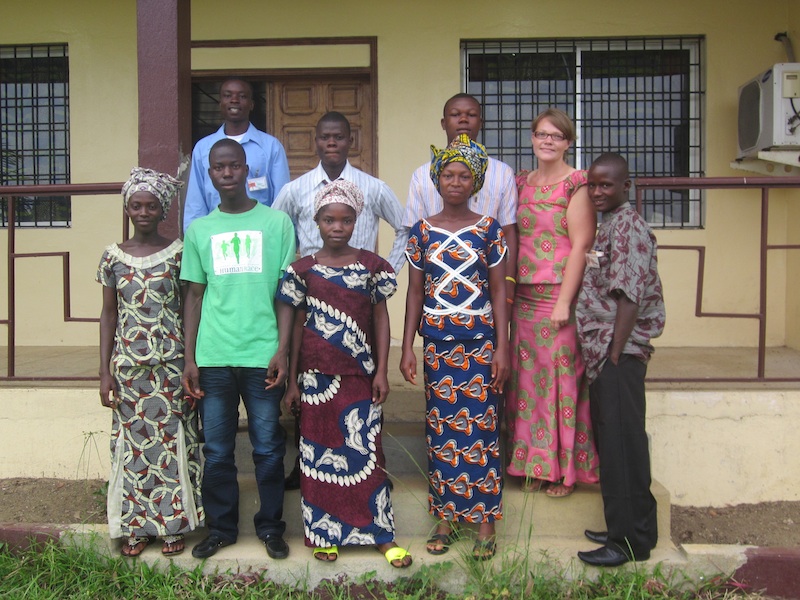
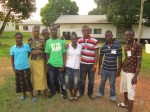
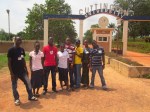
Interview day in Kakata. Front row: Comfort, Christian, Marie, Ama and Newton. Back row Morris, Saye, Isaac, and me.
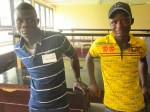
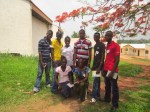
About two weeks ago I traveled to Kakata with eight of my student for EARTH University interviews. It was a trip almost five months in the making. They had written and re-written essays. They had read, studied, and all stepped up even more in class. I was literally watching them become leaders and as we waited for the cars in my front yard I had to bite back tears of pride and admiration.
…and tears of pre-disappointment and pre-heart break.
The truth of the matter is the best-case scenario I can hope for is that one of them will go. The much more likely outcome? None. All that work. All those dreams. Deflated.
We talked about it. I told them about my life’s laundry list of failures and disappointments. “But am I a failure?” They all laughed and shook their heads. “Exactly. If those other things had happened I wouldn’t be here with you now. And you know what? I cried and suffered when I didn’t win, but I’m glad because this is exactly where I was always meant to be. Keep accepting the challenge and change will find you. Keep moving forward and you are forced to get somewhere.”
Whatever happens we will keep fighting. That, after all, is all you can ever do.
To reinforce some of the seams I planned visits to two other colleges while we were on the road. Booker Washington Institute (BWI) is a vocational school in Kakata and I have a student from last year there studying plumbing. I called him and we walked across town to the campus. We were late, however, and he was in class with his phone on silent. The kids and I stood awkwardly by the football field and I asked if we should just turn back and make the thirty-minute walk back. They shrugged and I could see disappointment flashed across their faces. “Whatever you think Ms. RB.”
What do I think? I think we don’t give up.
I left them and walked up to a group of young men on the edge of the field. I greeted them, shook hands, and explained the situation. “I will pay you $100LD to walk us around for an hour or so.” They agreed and before I knew it we were meeting the Registrar and the Principal and crashing class in every department. Several professors were alumni of Central High and two of the students had surprise reunions with friends (“yard brothers”) they had lost touch with during the war. We saw students making ceramics, working at drafting tables, carving chairs, fixing engines, and practicing different roofing techniques. My student Emeka was even surprised when we crashed his plumbing class. “Ms. RB, I’m sorry! You taught me to always have my phone on silent in class!”
Good kids.
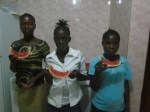
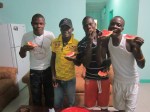
As the sun set we headed back to the dorm and they stopped for some light shopping, picking out new t-shirts and baseball hats out of wheelbarrows. Morale was high when we reached and they spent the night watching the new Captain America movie on DSTV, trying to freeze juice, and eating watermelon. (Two of the girls had never tasted watermelon before. They carefully saved the seeds and carried them home to plant. Symbolic?)
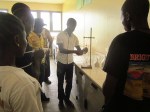
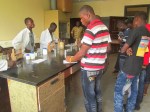
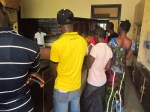
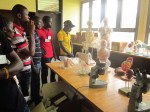
The next morning we left around 10:00 and hoped to make it to see one of the Response Volunteers teach at Cuttington in Suakoko. We arrived about ten minutes late, but were immediately greeted by another Volunteer and taken to the Dean. He took us to the chairmen of the Chemistry and Biology departments and we had an hour-long tour of each lab.
Second semester of senior year, six weeks before national exams, this was the first time any of them had been in a laboratory. The grins breaking across their faces erased every memory of frustration or disappointment I carried from the last two years. This is why I came. This is why it all matters. They were hopeful and excited and I could see some of the tension release. Even if they didn’t go to EARTH they had exciting options. Someday they could be the one in the white coat reading a lab manual and mixing chemicals. Someday they could be the one explaining the parts of the human skeleton and body. Someday they could be the young professor.
After two hours I had to pull them away but I could tell none of them would ever be the same. They will always stand a little taller and smile a little bigger. I asked them to write compositions about the trip and what they learned. When they finish final revisions I will post them here. Trust me, though, they’re good.
Whoever goes and whatever happens, I hope they know how proud I am of them and how proud they should be of themselves.
Note: This trip would not have been possible without the generous help of EARTH University and the Mastercard Foundation. They paid for all the students’ travel expenses and allowed them to travel farther from home than ever before.



Baiting the Hook
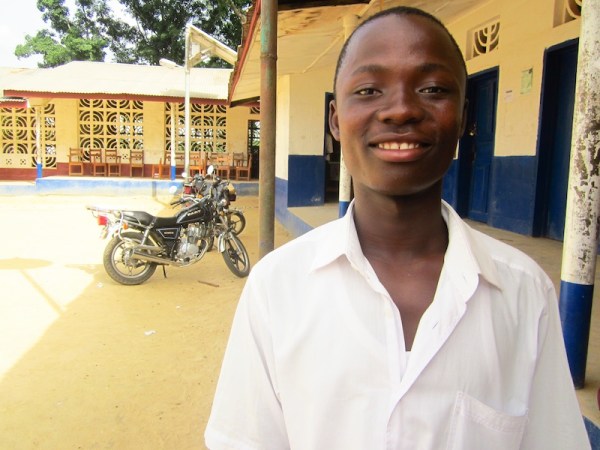
Last week I started writing about my experience using the techniques outlined in Doug Lemov’s Teach Like a Champion. That post focused on technique #35: Giving Props. This week I want to talk about what I consider the single most important tool a teacher can implement: I/We/You. (The majority of this post will focus only on the first step: “I”)
I/We/You is not a single technique, but a group of them that guides the structure and pacing of a lesson. Basically, it says that students should be gradually released to independent work and supported throughout. I understand it like this:
1. “I” the teacher have the information. Notes are given. Things are explained. Examples are shown.
2. “We” the class work with the information once the new content and objectives have been explained. The work is fairly evenly divided between student and teacher. They have a dialog and ask each other questions until everyone feels comfortable.
3. “You” the student master the information and can do it without assistance.
It’s just like learning to drive a car. First you spend years as a passenger watching other people drive (the “I” step). Then you get a learner’s permit and get in the driver’s seat but with an experienced driver there coaching and helping you (the “we” step). Finally, you feel confident, pass your driving test and go out on the road alone (the “you” step).
That’s great! But how do you make it happen consistently every day when there are seventy people in the room at varying ability levels? How do you teach them all to ‘drive’ in 45 short minutes? It’s no small thing, but friends, it’s possible. My students are living proof.
The majority of work applying I/We/You needs to be done before you come to class, as you’re planning your lesson. It seems basic, but before you start presenting information you should explain why is matters and why students should be interested to learn it. (Yes, this can be really hard!) This is Teach Like a Champion technique #12: The Hook.
TECHNIQUE #12: THE HOOK
This is what the Peace Corps 4-Mat lesson plan would call the “Motivation.” It is the few minutes before notes when class is starting and you’re competing with cell phones, geography assignments, and people in the courtyard for attention. A hook can be short or long, basic or showy.
Here’s a short simple hook I used recently: “Today we’re learning something very powerful. Today we’re learning the Quadratic Formula. By the end of class you will be able to use it to solve any quadratic equation. It’s ugly, but don’t worry. I will teach you a song so you will never forget. Ready? Let’s go.”
Here’s a longer, showier hook I used last semester. I was teaching collecting like terms and I knew from last year that it would be really hard for them. It happened to be citrus season and there were limes, lemons, oranges, and grapefruit everywhere. In Liberia they are all green and discernable only by their size. I filled a bag with an assortment and took it to school. I wrote the topic on the board then stopped. “Excuse me. I need your help with something before we start.” I brought out my black plastic and held up some of the fruit. “I have all this green fruit and it’s too much for me. I want to sell it on the road after school. What should I do?”
Dead silence. All eyes on me.
“I know! Can I pass around like this?” I started circling the room, yelling and shaking my bag, “Check in my hand for your green somethings! Greeeeen somethings! Five-five!”
They died. “No! No! No! “
“Oh! They’ll think I’m crazy? You don’t sell ‘green somethings’? What should I do?”
“Ms. RB, it’s all chockla in that plastic. You need a table.”
“Good idea.” I emptied it on someone’s desk. “Check on my table for your sweet something! Greeeen somethings!”
They died again.
“It’s not correct like that? Wow. Help me. I beg.”
They helped me organize the fruit into piles of limes, lemons, oranges, and grapefruit. “So you’re telling me that they look the same but they aren’t? Even though they’re all green and round I can’t put them together? Jesus! Well you just collected like terms.” I started my notes.
I repeated different versions of this over the next few days, circulating the classroom and distributing “green somethings” and asking people to come up and collect themselves into piles of “like somethings.” Then I walked down the line, took the fruit and gave each person a notecard with a term on it. “This big big grapefruit is like x3 and this 2 is like the small lime. Would you ever put a grapefruit in a pile with a lime and sell it? No! It’s not correct! So, I beg, don’t put your x3 with your 2!” As a result of this “don’t put your lemons with your oranges” became a popular saying in our class for a few weeks.
Both of these hooks worked, but obviously the second one took more preparation and planning. (The second hook is also an example of technique #27: Vegas, which I’ll write about in a future post).
TECHNIQUE #13: NAME THE STEPS
After your students are hooked you should move directly into notes. I use the exact same structure for my notes every day. This keeps my student’s notes organized and also helps them find things quickly. It also reduces questions and the need for them to ask their neighbors for clarification (causing noise). After a few introductory sentences I give them a “RULE.” I was doing this even before I read Teach Like a Champion and it has been one of the most popular, successful things I have done with my students.
Here is an example of the rule I give my students when we factor quadratic trinomials into binomials:
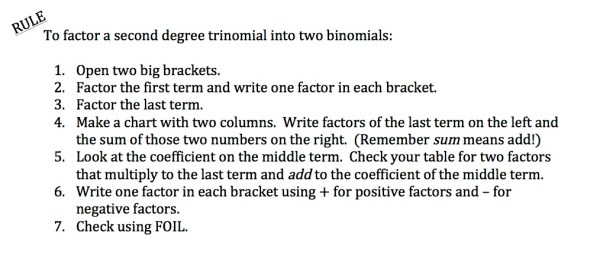
Just like the Hook, Name the Steps is going to sound embarrassingly easy, but the embarrassing truth is many teachers aren’t doing it. Each time I plan a lesson I sit down with two pieces of paper. I start solving a problem on one and on the other I record everything I do in the simplest, most direct English I can find. What am I writing? Where am I looking? What am I thinking? All of this then gets condensed into three to five steps that they can refer back to if they get lost, much like a recipe or formula. It’s even better if you can make the steps memorable. When I teach factoring trinomials into binomials I tell them, “Step #1: Open two biiiiig brackets!” then throw my arms up to make air brackets. By the end of the lesson they’re excitedly joining in.
(Lemov calls these rules “scaffolding” which I love).
After I present the rule I take questions and move directly into examples. I always divide the board into two halves so the rule is on one side and I can refer to it while I work the example. While this is happening I ask them to stop writing and just watch and listen. “Put your pen down and look up when you’re ready to go.” This directly models for them what is happening at each step in the rule. We repeat this two or three times until they’re ready to try independent practice.
TECHNIQUE #14: BOARD = PAPER
Liberian students don’t have textbooks so good note taking is imperative—we are writing the textbook. I write my notes on the board exactly how I expect them to appear in my students’ notes and take time to show answers how I expect to see them on homework, quizzes, and tests. Technique #15: Circulate helps me monitor this. (Again, this is going to sound obvious, but this technique requires you to lesson plan and do so seriously.)
TECHNIQUE #15: CIRCULATE
Circulate is used during all phases of an I/We/You lesson, but it is often neglected or forgotten during the “I” step. When possible I enter the room early (before school or at recess) and put my notes on the board. This allows them to start copying the moment they enter and it frees me up to immediately move around the room greeting them, making quiet corrections, and checking for board=paper. “Welcome back, I missed you!” or “Show me your math. Geography won’t help you pass the math WAEC in May.” Circulating also allows me to see how everyone is progressing and when I can move forward. As I see them start finishing I start explaining what I wrote, often from the back of the room. This allows me to make sure I’ve written clearly and that everyone can see from where they are sitting.
As with anything, if you do this consistently it will become normal. It will just be something you do, associated with neither good nor bad behavior. It also gives them the opportunity to quietly grab your arm and ask for help if they feel shy.
Liberian colleagues, I know what you’re saying. “There are too many people. I can’t pass between the desks. I’ve never seen the back of my classroom.” Sorry, but save your excuses. If you want to go they will find a way for you to go. Last year with 85 in my 12th grade I often felt like Moses parting the Red Sea. I would just start going in and legs and bags would quickly move to make a path. No, you’ll never be able to get directly to each of them, but you should be able to get within arm’s reach and usually that’s enough. All you can do is try and the more you try the easier and better everything will become.
The Hook, Name the Steps, Board=Paper, and Circulate are powerful techniques in and of themselves. Used together to deliver the “I” part of an I/We/You lesson, however, they are a knockout punch. Students are excited about the new material and have the tools and support to start applying it independently.
Magnanimous reader, have you used any successful (or less successful) hooks? Have you used similar techniques to help motivate and ‘scaffold’ your students? Post them here so we can all benefit from your experience.
Next time I’ll write about how I negotiate the move from “I” to “We.”
Giving Props
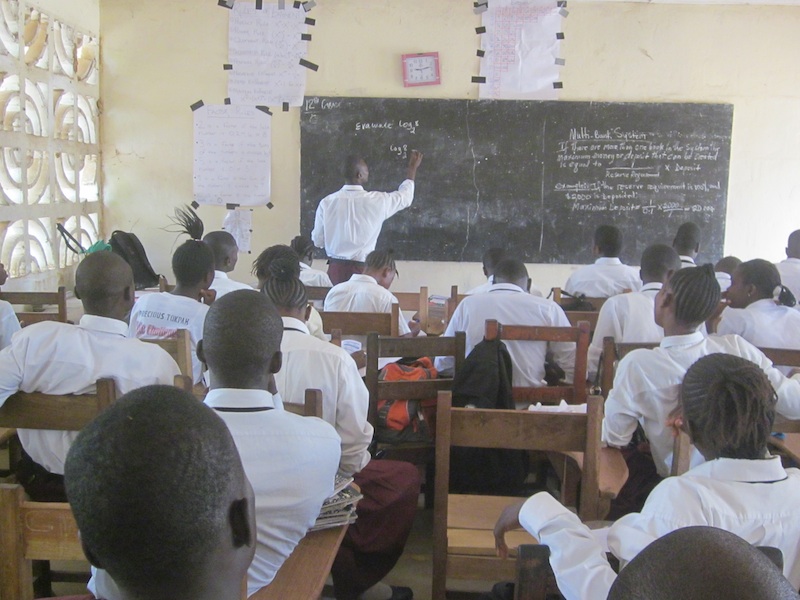
Saye solves a logarithm problem and gets props from his classmates in 12B.
Peace Corps has three goals:
- Helping the people of interested countries in meeting their need for trained men and women.
- Helping promote a better understanding of Americans on the part of the peoples served.
- Helping promote a better understanding of other peoples on the part of Americans.
My blog has always been a goal #3 activity, designed to help people ‘on the other side’ understand life in Liberia. Today, however, I want to do something a little different. Today I’m going to blog about teaching.
Last summer I read Doug Lemov’s Teach Like a Champion and have implemented many of his techniques with great success. The book outlines 49 techniques that teachers have been documented using in America’s top performing charter schools. Over the next few weeks I plan to write about the techniques I’ve found most useful and how I’ve applied them to teaching in Liberia.
Today it’s all about technique #35: Giving Props.
Props are a way to celebrate student success and create a supportive and encouraging classroom environment. They are an excellent way to make class fun and add energy. They can also be almost anything! The key is to choose something quick and easy that everyone participates in and that can be easily cued.
The first prop I tried was ‘two snaps.’ It was simple. A student solved a problem or answered a question correctly and I said, “Give Junior two snaps.” The whole class snapped twice and we were back to work. They loved it so much in 11th grade they started yelling “bawk! bawk!” which translates to something like “$100! $100!” So instead of two snaps now I just say “Bawk Bawk, Comfort!” and everyone joins in. When I solve a difficult problem or do something they like they’ll sometimes even give me my own. “Ms. RB, I give you bawk!” When they won the football game they marched to our house chanting it and snapping.
(Do I need to say I loved this?)
It’s been a little more difficult in 12th grade. In typical senior fashion they are small too-cool-for-school. ‘Two snaps’ worked for about a month then half the class stopped doing it. So we talked about it. “I can see you don’t love ‘two snaps’ and that’s alright. It’s important that we find something you do love, though, so we can celebrate all the good work you do in here.” I sent them home to think about it.
In 12B they took it so seriously they held a vote after I left and agreed on ‘thumbs-up.’ Now I say ‘thumbs-up, Precious!’ and we all put two thumbs in the air. These days they give me hard time if someone solves and I forget to cue ‘thumbs up.’
Watch a longer version of the video here. (And check back in the coming weeks as I plan to add clips from the other classes.)
In 12A we staged an American Idol style vote as each volunteer performed various hand signals, claps, and snaps. It was evenly split: half the class wanted to keep ‘two snaps’ and the other half wanted to do a double thumbs-up. “Can we try both?” I asked. “The person can tell us if they want ‘old style’ or ‘new style.’” They agreed to this… then it immediately fell apart. After someone solved a problem I asked, “show your style.” Rather than indicating ‘old style’ or ‘new style’ people started doing completely different things like waving, clapping, and jumping. For the most part it’s all right, though, so I’ve let it continue. (“Show Your Style” happens to be a popular song in Liberia, which probably helps!)
Interestingly, as a result of ‘show your style’ I’ve seen students volunteer to come to the board for the first time ever. They have an idea for a style and they want a chance to show it and have the class join in. The other day I overheard a quiet girl say, “I’m going to solve quick today so I can come on the board and show Ms. RB my style!” It’s dangerous to have an open-ended prop but given results like this I think it’s worth the risk. You just have to be firm that things like “Everyone jump up and run outside!” like Jonathan tried one morning, are not props you expect from serious students.
As with anything, when you add props to your class it is important to be enthusiastic and repetitive. Explain why you’re asking them to do it and how it will benefit them. When I introduced it I said something like, “We’re going to do a lot of hard work in here. When someone does something fine it’s important that we thank them and celebrate our success as a class. When I say ‘two snaps’ put your hands in the air like this and snap. Let’s do it together.” Then you should ideally have a lesson planned that will involve plenty of student participation and, hence, the giving of props.
Make it a routine for you as well as them. Remember to cue it (and do it!) every single time so no one feels left out or wonders what they did wrong. Repetition will also normalize the behavior. We do this every day. No need to snicker or feel silly.
Have you used anything like this to encourage or motivate people? Please post about it in the comments below so we can have a conversation.
Next week I’ll write about how I use I/We/You and techniques #12-15 to structure my lessons and maximize my 45 instructional minutes each day.
Liberian Bards
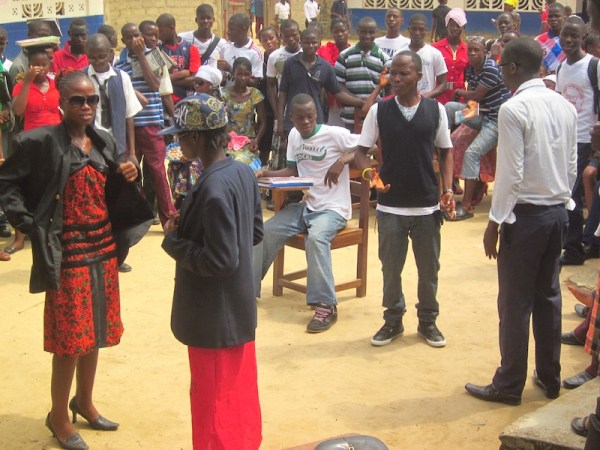
Precious and Neomie disguise themselves as men to try to save their husbands in the seniors’s inspired version of The Merchant of Venice. Kelvin, Ezekiel (in the sweater vest), and Jonathan look on.
My students are the most amazing people I’ve ever met. They are determined and motivated and given a suggestion will carry it a mile. That is exactly what happened last week as a hundred students formed a ragged but reverently silent circle as the Liberian Merchant of Venice was born.
Rewind.
I’m the 12th grade class sponsor. That means it’s my job to know all their business and solve all their problems. This can be “Ms. RB, I am sick and I want to go to the hospital,” or it can be “Ms. RB, Jonathan took my pen!!” Two weeks ago it was serious. They followed me from campus shaking their fists and demanding I do something. “The literature man hasn’t visited our class in almost six weeks, Ms. RB. Do something! We are scared of WAEC! Can you teach us? Please teach us literature!”
Once I finished laughing (Me teach literature? Me teach even more hours?) I agreed it was a serious problem, but I didn’t agree they had to be victims of an unfair system. They could create their own system. “Listen,” I said, “you are just as responsible for your education as the man is. If you want something you have to chase it! Tomorrow I’m bringing you a book. Use your free periods and plan a drama to perform for the whole school. Your younger brothers and sisters need your help.”
The next day I called Ezekiel to follow me out of class. “They tell me you’re the head of the drama department.” He nodded confusedly, “Oh, we don’t really do anything.” I shoved the Penguin book of Shakespeare into his hands. “Now you do. Choose one and plan a drama.” I have never seen him so excited and serious (he thoroughly hates math). “We will do it, Ms. RB. We will do it!”
Later that day he chased me down the street yelling, “I’m a changed man, Ms. RB. A changed man!!”
Four days later they told me it was ready. We arranged a day for them to preview it for me but before that could happen color day happened. On color day they each pay $10LD and can wear street clothes instead of their uniforms. “We have to do it on color day, Ms. RB. I beg!” Ezekiel said. I just raised an eyebrow and asked him to promise he wouldn’t embarrass me.
I can’t believe I ever doubted them!
The Vice Principal granted us permission to perform it right before they dismissed everyone for Easter break, a doubting smirk resting on his lips much the way mine must have looked.
He climbed the podium and made his announcements before turning. “And now the seniors have prepared a drama for you,” he said with a laugh. He looked at me. I looked at him. Then I frantically looked around. Where were they??
Making palaver as usual, they had gone into a council meeting! I banged on the door. “Come out! Come out! I don’t care what’s happening! Do your drama right now!” Ezekiel poked his head out and made to shhhh! me. “Tell them to wait small,” he said. I knocked him on the head and turned back to the VP with a frown. He shrugged and waved everyone out the gate and on to their break.
Ten minutes later the seniors emerged. “Where did they go? You should have told them to lock the gate!” I just shook my head, “I am so mad at you.” They still wanted to perform, though, so I told them to assemble the students who remained and preview it for me. Out of the nearly deserted classrooms about a hundred students emerged and formed a circle in the courtyard. What followed was one of the most hilarious and delightful experiences of my Peace Corps service.
They had translated everything into Liberian English but just in case that wasn’t enough Ezekiel leapt onto the podium every two or three minutes and explained what was happening. “Ladies and gentlemen, you just witnessed… watch and see what happens next.” The audience was rapt. They laughed. They yelled encouragement. They shhh-ed each other. “Oooh this is so fine!” I heard my neighbors mumbling.
Then, straight out of the Globe Theater, noise erupted on the side opposite me. People started shoving and two girls came into view, absorbed in a vicious hair-pulling fistfight. The actors paused to break it up then brushed themselves off and continued as if it was business as usual.
Taking a bow, they received a standing ovation. “Thank our Peace Corps teacher, Ms. RB!” Ezekiel shouted. I just shook my head and pointed back at them. What had I done but plant the seed? What had I done but given them a book and an idea?
“The next drama will be The Gods are Not to Blame,” someone shouted. “Ms. RB, do you have book?” I nodded and, with a huge grin, gave them my biggest bawk bawk (what we use to celebrate success during class). The crowd dispersed and people rushed the “stage” begging for a part in the next play.
Just a math teacher? Not for a second. Never ever doubt that quiet encouragement can move mountains and set motivation in motion.
Song of the day? J Ross Parrelli’s ‘Miracles’
Young Artists
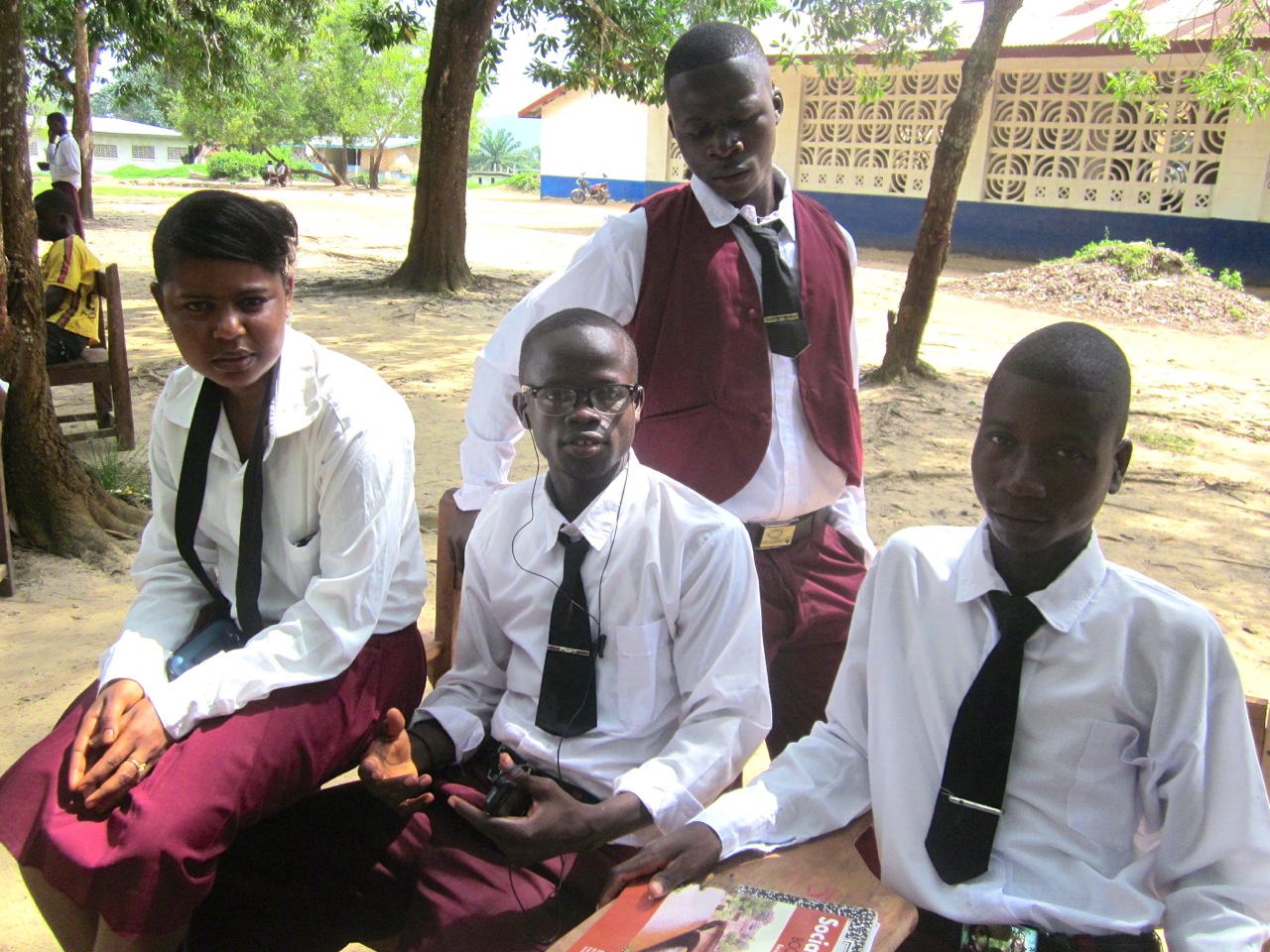
Giving a quiz can be a very stressful situation in Liberia. After almost two years, however, I have a system that seems to work. I give them sheets (so there is no yelling, fighting, or scrambling for paper) and I collect everything together at the end (otherwise they get up, leave, and disturb outside). The trick is to give a quiz that most of the class can complete successfully but still keeps all of them busy the entire 45 minutes.
I used to ask them to write compositions when they were done. “What do you want to do after high school?” or “Who do you admire?” (that was an excellent one because 80% of them said me). It was never for points but I would mark their grammar and spelling errors. Some of them really liked this but some of them hate writing so they’d disturb anyway or cause noise complaining to me. So a few months ago I tried something different. I was tired and I didn’t want to spend two days grading quizzes and compositions.
I wrote the quiz on the board, gave them a long look over my shoulder, and wrote “FINISHED?? Draw Ms. RB a beautiful picture.”
This has been one of my best experiments. They love it. I love it. They stay quiet and get so into it they don’t want to give me their quiz papers when time finishes. “But, Ms. RB, I beg! I’m not done drawing your car!” Thank god we have a system for passing papers so they know when I say, “You have one minute to pass your papers to the left and get them in my hand,” I mean it.
There have been many beautiful pictures, but today I wanted to share two with you from my 11th grade quiz last week. One is a picture of the student giving me an award and the other is a picture of my brother. Really, I don’t understand because I’ve never talked about my brother in class, but it delighted me nonetheless. I held it up in class today so everyone could give the young artist his “bawk bawk.”
Really going to miss these ‘kids’…

Another Day on the Porch
Just another day on the porch with the kids. Pape and Angel brush Maya’s hair then Angel starts knocking Maya’s head and announcing, “RB! Dat Maya here!” Gotta love ’em.
What I am Able
Sarah McLachlan’s World on Fire is one of my favorite things. I hope you like it too, dear readers.
Be strong. Be fearless.
“In the confrontation between the stream and the rock, the stream always wins. Not through strength, but through persistence.” ~Unknown
 life magnanimous